Saturday, August 4, 2012

ANOTHER FESTIVAL for "A Zest for Life"

The Festival International du Film Panafricain of Cannes, France has accepted our documentary, A Zest for Life:  Afro-Peruvian Rhythms, a Source of Latin Jazz, for their upcoming (April 2013) festival.  This will be a nice event for us.  Not only will we get to know filmmakers from Africa and people interested in the African diaspora, but, well, I used to live in southern France so it will feel almost like a homecoming to me.

A homecoming of sorts, of course.  The French Riviera has changed tremendously since I was a teenager.  Now, what you find is huge hotels and wall to wall tourists on the beaches, whereas when I was young....

This is the view most people see of Cannes--a beach with wall to wall people.
This is a fairly young festival.  The 2013 fest will be its 10th edition.  Interestingly, both of the films I especially liked at the Black International Cinema, Berlin (Dar He and Africa:  the Beat) also were featured in this festival.

 In 2012, the festival showed six feature length films, six shorts, and seven documentaries.  It's clear that a lot of the filmmakers are originally from African countries but they did their filmmaking (and probably also went to film school) in France.  Another large batch of filmmakers came from, and filmed in, Moracco.

A more normal street where you're likely to see more French people.
The rest hailed from the United States, the West Indies, Switzerland...a very international bunch.
We DO anticipate screening A Zest for Life in the United States, but festivals here take a long time to make their selections.  In the meantime, this gives me a great excuse to go back to Europe after spending a few months in California.  I'm looking forward to it.

Tour de la Castre, in the older part of town.

OUR NEXT POST will be about Toro Mata:  the traditional song and dance, plus more modern versions.

Saturday, July 28, 2012

Black Latinos' identity: black, Latino, or both?


On reading various articles and first-hand accounts, watching some relevant videos on YouTube, and otherwise investigating the topic, I’ve learned that black Latinos have as much and in fact probably greater problems in being accepted as do African Americans.  


According to people of African descent who come from Panama, Peru, Columbia and other countries of central and South America, in their native land they are not considered Latino, and are not felt to truly be a part of their homeland’s culture.  In the United States, they are asked to choose between being black and being Latino.

Jesús López dancing in the hatajo de negritos.  Photo:  Lidia López

In our documentary, A Zest for Life:  Afro-Peruvian Rhythms, a Source of Latin Jazz, I note that Afro-Peruvians have their own culture just as Peruvians from indigenous communities have theirs.  But although Peruvians from indigenous communities certainly have been discriminated against and marginalized in ways similar to the treatment accorded Afro-Peruvians, indigenous peoples are considered “Peruvian.”  Afro-Peruvians have sometimes had a problem convincing others that they, too, and “Peruvian.”

I want to distinguish here between the past and the present.  The current government in Peru is notable for its interest in providing equality to all Peruvians, and not only accepting but also celebrating the various different ethnic groups and their unique history, culture and contributions.  But this new government has only been in office for a very few years, and so there is still much left to be done before all Peruvians will receive equality of treatment and have equal opportunities.

And in many Latin American countries, the government is not so enlightened.  Furthermore, the ordinary man – or woman – in the street is often even less enlightened.  For many Latinos, skin color is considered pretty important, and the lighter the skin, the more acceptable the person.  This view is even held by many Latinos of African descent.

This kind of marginalization and lack of acceptance is something that many African Americans can relate to.  This is only one of the important parallels between black Latinos (including Afro-Peruvians) and African Americans.

OUR NEXT POST will be about the National Museum of Afro-Peruvian Culture in Lima, Peru.

Sunday, July 22, 2012

A Menina dos olhos grandes/Girl with Big Eyes, final film from Black International Cinema, Berlin

A Menina dos olhos grandes/Girl with Big Eyes is the last film I'd like to mention that I saw in the Black International Cinema in Berlin.  Directed by Alexis Tsafas and Fonseca Soares, it's a feature length drama about a young girl of mixed parentage (Spanish mother, Cape Verdian father) who was born and spent her early years in Cape Verde, but then went to Spain for her schooling and only returned to Cape Verde as a young woman.

I was not able to contact either of the directors of this film, so have no photos to present.  But I can say that it is charming and complex.

The young woman, who left for Spain to live with her mother's family after her mother died, believes that the Cape Verdian woman who replaced her mother in her father's life, is a bad person who stole her father away and has too much influence on him.  Not an unusual thought for a young girl, especially one who has recently lost her mother.

Our heroine also believes the "new" woman is practicing witch-craft.

And, well, she is.  Witch-craft, in this context meaning something akin to voodoo, is an accepted practice in Cape Verde.

When our young woman returns, she finds her father dead and the "new" woman dying.  She learns, through talking to those who knew her father, that things can be very tough in Cape Verde.  For example, the "new" woman comes from an impoverished family.  Her relationship with the father is one of the ways she keeps herself AND her own mother and sister from starving.

Our young woman also learns that her leaving Cape Verde had a devastating effect on her father.

The movie ends with our young woman sadder but wiser.  The story is told in a convincing manner, the acting is fine, and the setting is appropriate.

But I found several flaws in the film.  The main one has to do with its reliance on flashbacks.  And the problem here is that it was not always clear to me what time period we were in.  This was especially true when we saw our heroine as a teenager and realized it was the same actress as our heroine as a young woman.  Using the same actress in scenes supposedly years apart made the context very confusing.

On the whole, however, I really enjoyed this and found that the story touching.  Three cheers to the filmmakers.

NOTE:  For those of you who, like me, aren't sure where Cape Verde is, it's two small islands off the coast of West Africa.  The principal languages are Portuguese (for years it was a Portuguese colony but is now independent) and Crioulo.  Most of the inhabitants are black.

OUR NEXT POST will be about black Latinos' identity:  black, or Latino, or both?

Tuesday, July 10, 2012

NEXT TO LAST FILMS from the Black International Cinema, Berlin


In addition to Dar He and Africa:  the Beat, there are three other films that I saw at the Black International Cinema festival in Berlin that bear special mention.  These are Askoo, a short film from Iranian filmmaker Mohammad Ali Hashemzehi:  Shahde Sang/the Nectar of Stones, another short from Iranian filmmaker Sattar Chamani Gol:  and A Manina Dos Ojhos Grandes/Girl with Big Eyes, a feature-length dramatic narrative by Cape Verdian filmmaker Alexis Tsafas.

Askoo is a 25 minute short fim that has been in several documentary film festivals.  It was shot in Baluchi with English subtitles.

It is about a man and his camel.  The man in question is a camel dealer.  Apart from his herd, he has one camel that is both his mount and companion, and that is Askoo.   

His relationship with Askoo is somewhat like what, in other parts of the world, you’d expect to develop with your dog, or perhaps more appropriately, with your horse in the days when horses were a primary means of travel.  Because the camel dealer spends most of his time alone in semi-arid regions with his camels, his relationship with Askoo is very important to him.

At work on "Askoo."  Filmmaker Mohammad Ali Hashemzehi is on the right.

And there is history involved in this relationship. As the film develops, we learn that there has been a major conflict between our camel dealer and Askoo.  At the very end, in an off-hand way, we are finally led to understand the reason for this conflict.

The movie is charming.  There is the interesting, “exotic,” side of seeing what life is like for a camel dealer in the backlands of Iran, but the hints dropped about the conflict are what really draw us in.  My one major criticism of the film is that there was something important lost in the translation.  (What in the world is “brambles?”)  As a parting note, Askoo the camel certainly has big, beautiful eyes.

A scene from "Ashkoo."
The second film, Shahde Sang/the Nectar of Stones, is also by an Iranian filmmaker.  It´s in Kurdishm, with English subtitles.

This 25 minute short film takes us up a steep, rocky, barren mountain with three men set on getting something that is, we are led to understand, still available on the cliff face.  It is a long journey they make, and at the end of it, one of them (who is doing this “for the last time”) must be hoisted up to the middle of the cliff face by the two others.   

Plenty of drama here:  will the two tire and let their friend drop down to certain death?  Will the bees (yes, halfway up the cliff’s face, he encounters a bee’s nest) sting him so badly that he lets go of the rope?  Will this, his last journey, end in his death or in his getting what they came after?

Askoo the camel with the films´lead, the very personable camel dealer seen from the back.

We only learn more than halfway through the film, and much of the way through the dramatic cliff-hanging part, what they are after:  honey, made by bees that have their nest… in a hole halfway up the cliff.  To cut to the quick, yes, he gets the honey without dying.  His companions lower him back down to safety, and the three of them…consume all the honey that they just spent most of the day getting, at the risk of the life of one of them.

It is quite humorous in sections, happily, by intention.  Would I ever go through all that for a feast of honey?  No way.  And in places, the drama was a little forced.  But:  did I enjoy the film?  Absolutely.

Note that I was unable to contact Sattar Chamani Gol, the filmmaker responsible for this film, and so don´t have any photos related to him/her or the movie Shahde Sang/the Nectar of Stones.

OUR NEXT BLOG will be about a film from Cape Verde.  This will be the last film we´ll cover from the Black International Cinema, Berlin.

Sunday, June 24, 2012

Africa: the Beat -- that other really fine movie from the festival

I mentioned that there were two films that really stood out in the Black International Cinema festival in Berlin.  Let me remind you that I did NOT see every entry, but I did see an awful lot.  This second film, Africa:  the Beat, is a truly fine and moving production, a documentary very skillfully filmed (with little in the way of fancy equipment) in Nzali, Tanzania.

The producers-directors are a cooperative called Samaki Wanne that consists of four people: a filmmaker, a painter, and two musicians.  The mover and shaker is Polo Vallejo (far right in the photo below), a musician who spent over 15 years visiting and learning about the Wagogo of Tanzania, and decided as a result of his research that it would be important to make a film about them.  The Wagogo are a tribe for whom music is an essential part of daily life, of the passing of the year, of the different stages of life, of their relationship to their environment...in brief, an essential part of their existence.

Samaki Wanne--Manuel Velasco, Javier Arias Bal, Pablo Vega & Polo Vallejo (Photo:  Carmen Ballvé)
The cooperative decided early on to make the film without the use of a voice-over or any other kind of detailed narration.  The Wagogo, obviously, are not speaking (or singing) in any of the language with which most viewers will be familiar.  So why did the cooperative decide against a narrative?

Their aim, and it is to their great credit that they achieve this aim, is to let the music and the images speak for themselves.  Polo Vallejo explained, for example, that every cut is dictated by the rhythm of the music.  Their are a few frames with a bare minimum of printed words (spring, the harvest...) but for the most part, we simply see and experience the  complex rhythm of the Wagogo´s life through their music, and their dance.

Aside from the wonderful vicarious experience that this provides the audience, I was interested to learn from Vallejo that only the Wagogo women are allowed to play the drums, and the drums are a very important part of their music.  In many forms of music, most or all of the drummers are men, so it is intriguing to find a peoples with such a different tradition.

A Wagogo musican with his dog.  Photo:  Carmen Vallavé
One of the aspects of this film that I found particularly attractive is the beauty of the music and the dance.  This is due both to the intrinsic merit of the music and dance, and also to the skill of the filmmakers.  I can easily imagine a film in which the music and dance could be made uninteresting by filmmakers unable to let them shine through.  My congratulations, then, to the Samaki Wanne cooperative.

In addition to its screening at Black International Cinema, Berlin, Africa:  the Beat has been accepted into film festivals in New York (USA), Montreal (Canada), Florence (Italy), the Canary Islands (Spain), Zanzibar (Tanzania) and others.  If you have the chance, I certainly recommend that you go to see it.


OUR NEXT POST will be about a few of the other films from Black International Cinema, Berlin--then, we will return to Afro-Peruvian music and dance.

Friday, June 8, 2012

Mike Wiley, Rob Underhill, and the film "Dar He: the Lynching of Emmett Till"

There were two films that I saw in the Black International Cinema festival that really stood out.  I do want to point out that I did not see EVERY film in the festival, so I may have missed some really great things, but I did see an awful lot.

One of these two very special films was and is:  Dar He:  the Lynching of Emmett Till.  It is directed by Rob Underhill and stars Mike Wiley.

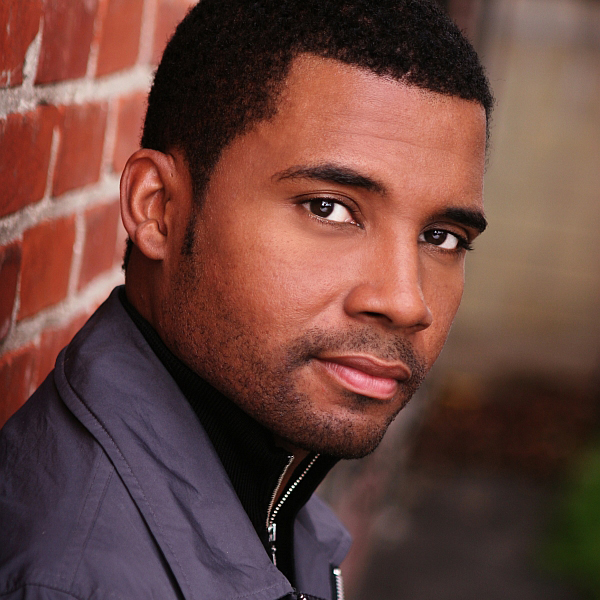
Mike Wiley, the masterful and versitile actor and writer.

I should say that it stars, and stars, and stars...Mike Wiley, who wrote the stage play from which the film was made, plays ALL 36 ROLES in the movie.  And he does it so well that you leave not thinking about his incredible acting skills, but about...the lynching of Emmett Till.

Hooray for him.

And hooray for Rob Underhill, who did some pretty fancy stuff in directing the film but again, the fancy stuff doesn´t stand out.  What stands out is the story, and that´s what a good director wants.

Dar He is about a real incident.  Many of you will have heard of it.  A teenager, 14-year old Emmett Till of Chicago, went to a small town in Mississippi to visit his relatives.  Emmett was black, and this was in 1955, in the days of segregation in the south.


Rob Underhill,  the director and co-script writer.

Acting on a dare that his cousins and friends made, Emmett said something like "you´re cute" or "hey sweetie" or something of that sort to the white woman worker in a dry goods store where he went to buy some candy.  When he left the store, the woman came out and he whistled at her.  Emmett had a speech impediment, and the whistle may have been due to that, or it may have been intentional, and due to the dare.

In any event, for this, he was first tortured and then murdered by the woman´s husband and a friend of that husband.  They dumped his body in the river.

The two men were tried, found innocent, and freely admitted they had done the deed.  And in the days immediately after the trial, they were congratulated by many of their white friends and neighbors for upholding "southern values."  Again, this was the segregated south.

A legal note:  once found innocent of a crime, you cannot be retried for that same crime.  It was therefore not possible to retry them after the trail ended, even with their admission of guilt.

The murder of Emmett Till and the outrage it caused is a major element in the growth of the Civil Rights movement.


Again, Mike Wiley as actor, Rob Underhill as director, the two of them as co-authors of the movie script, and the technicians (Aravind Ragupathi and Larry Gardner) who filmed and then composited all those shots so that you saw Mike Wiley playing several different roles on screen together, did an excellent
job.  I highly recommend this movie

OUR NEXT POST will be about Africa:  the Beat, by director Samaki Wanne.

Friday, May 25, 2012

The multi-talented Dr. Donald Griffith, organizer of Black International Cinema*

There is an article (in German and English) in the 2011 program book for the Black International Cinema festival of Berlin entitled ¨Great accomplishments by a multi-talented artist regarding international exchange:  Dr. Donald Muldrow Griffith."

The term "multi-talented" is completely appropriate.

I know Dr. Griffith as the organizer and presenter of the Black International Cinema festival, and as the host and director of the television program "the Collegium."  I also know through conversations that he started his professional life as a psychological therapist.

Those, however, do not fully describe him and his work.  He is also a dancer, and co-founder plus director/producer of the Fountainhead Tanz Theatre of Berlin.

Born and raised in Chicago, his father was a psychologist and his mother, a concert pianist.  Dr. Griffith trained as a therapist, and practiced that profession but at the same time, partly due to native ability and inclination and partly due to the pressures of his work, he began studying acting and dance.  At a certain point, he decided to leave the psychological profession and devote himself more fully to the arts.

He performed in several musicals including "Stop the World, I Want to Get Off," and won several awards including "Best New Off-Broadway Actor."  As a dancer, he performed in several companies in New York and Chicago, acting at times as solo dancer.

He also acted as manager for Oscar Brown, Jr., for a period.

As if this were not enough, he began acting and found roles in both television and regular cinema.

In the late 1970s, The Belin Theater des Westerns invited him to come to that city to act as performer and choreographer.  As time passed and he realized he enjoyed cultural exchange and the Berlin life, in 1980 he and several collegues founded the Fountainhead Tanz Theatre.

And in 1986, he founded the festival that is now called the Black International Cinema festival.  A truly international festival, this year (2012), it screened films from several African countries, from the United States, from severl middle-eastern countries and from Europe.  The festival does not normally give prizes, but instead seeks to promote intercultural exchange and serve the black community of Berlin.

In 2009, he founded the television program, The Collegium.  An interview show, its most famous guest is Pres. Barack Obama.  It airs regularly in Berlin and throughout Europe.  Dr. Griffith is producer, director and host.

So you can see, the term "multi-talented" is indeed best to use when describing the life and activities of Dr. Donald Muldrow Griffith.

*Material for the article came from personal conversations with Dr. Griffith, on-line research, and from an article by Shiu-Chin Yu in the 2011 program of the Black International Cinema.

OUR NEXT POST will be about Mike Wiley, Don Underwood, and their film, Dar He, the Lynching of Emmett Till.  We will have two more posts related to the Black International Cinema festival and films that sceened in it this year, then we will return to Afro-Peruvians.